
Overview
Financial clarity designed for peace of mind
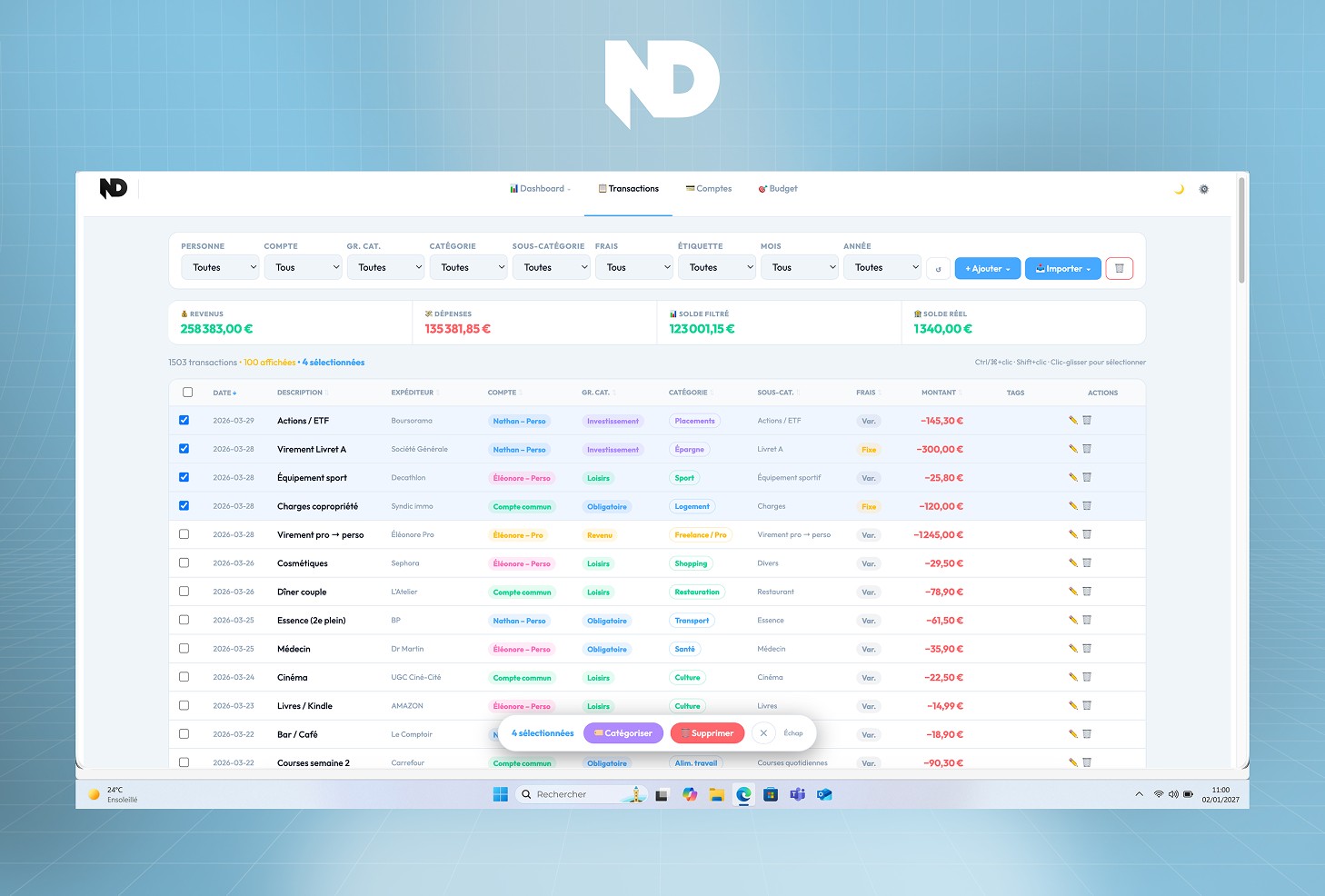
Seren is a solo personal finance project designed to bring more clarity, control, and serenity to complex financial management. The project was born from a frustration with existing financial platforms, whose dashboards and statistics often felt too limited for advanced and highly personalized use cases.
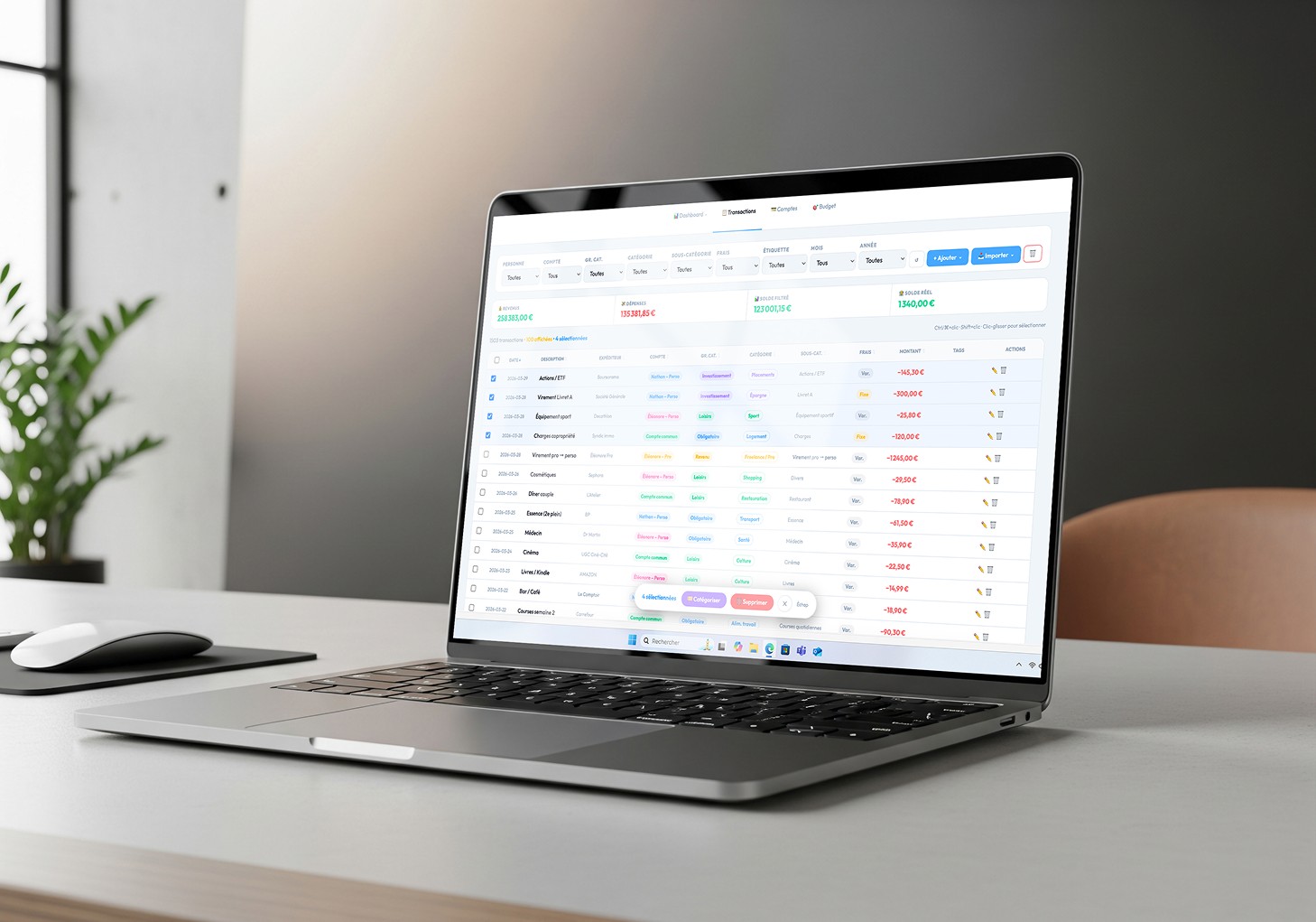
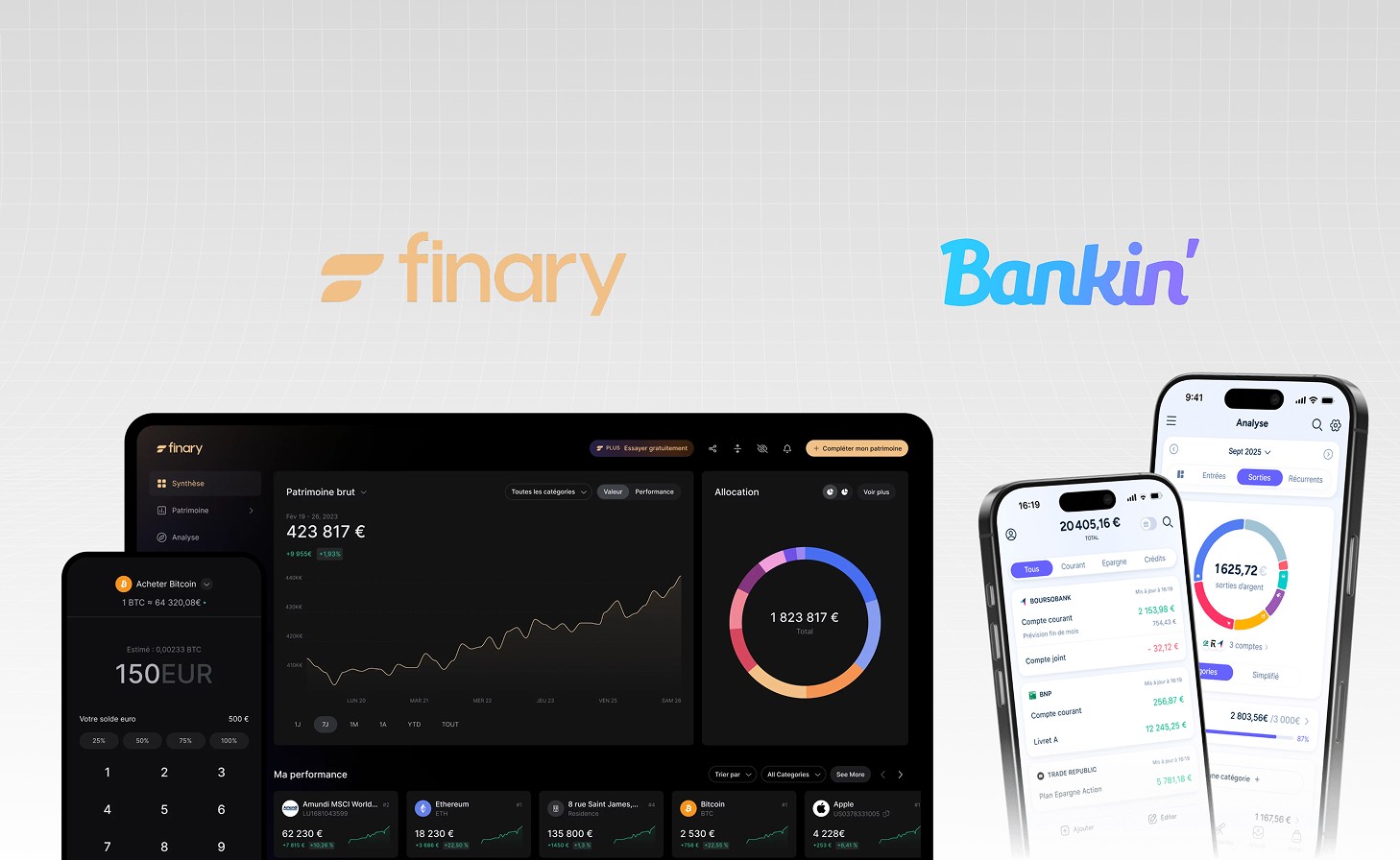
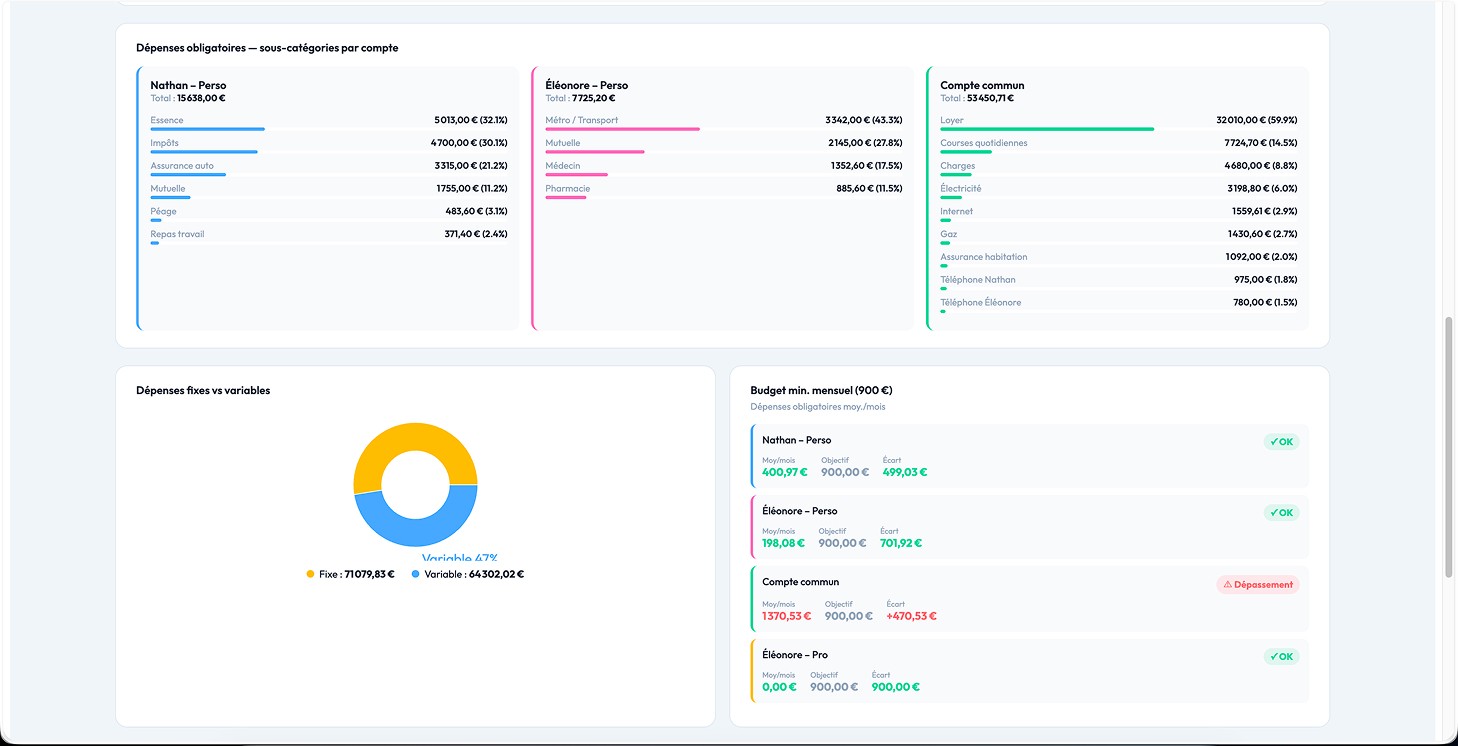
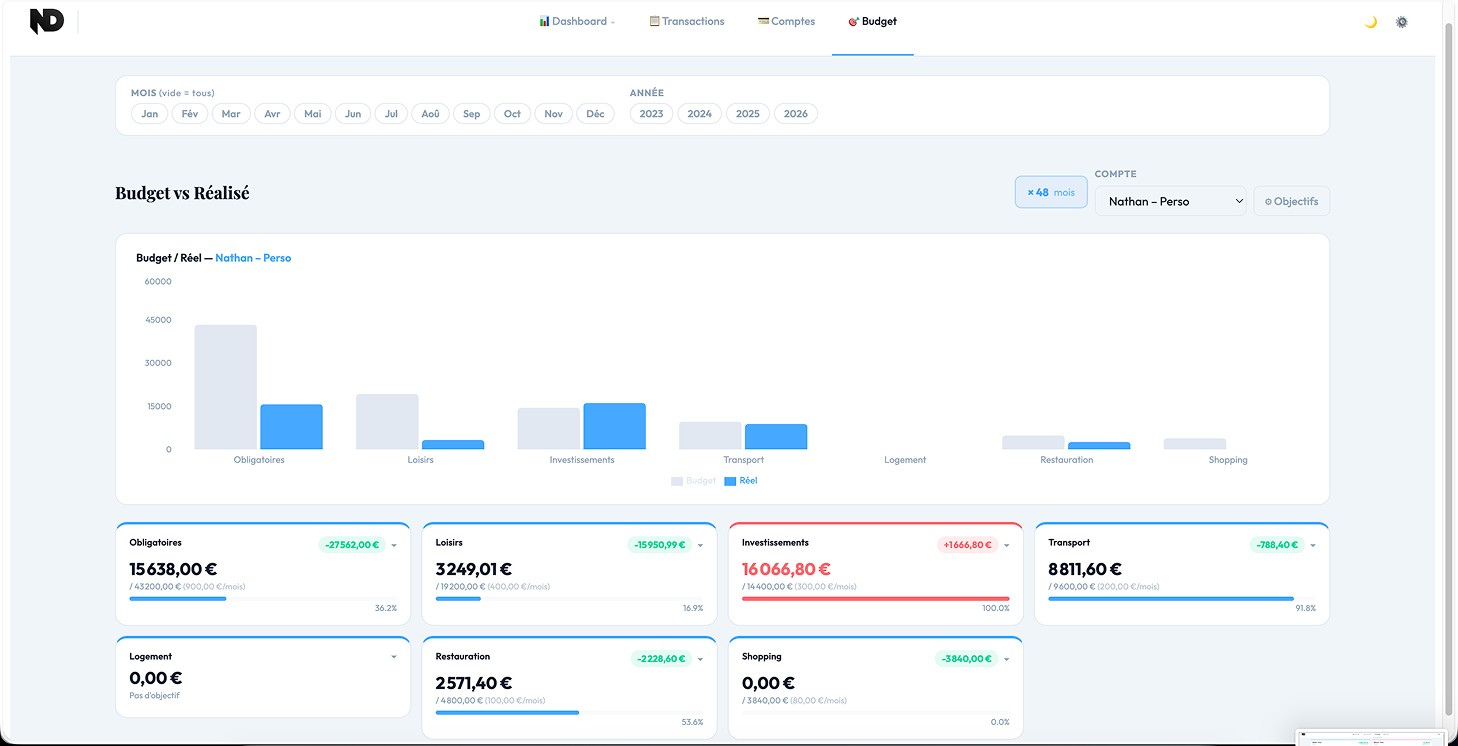
Instead of adapting my workflow to the constraints of paid aggregation services such as Bankin’, Linxo or Finary, I decided to build a fully customizable solution tailored to my own needs. Seren allows me to centralize and analyze multiple personal and shared bank accounts, track investments, manage virtual budgeting envelopes, and visualize household finances through detailed and flexible statistics.
Built entirely with an offline-first architecture for privacy and security reasons, the application works through CSV imports, giving full control over data manipulation and organization while remaining independent from third-party banking infrastructures.
Role : Product Design · Vibe Coding
Team size : Solo
Duration : 3 Days MVP · 3 Weeks Iteration & Refinement
Focus : Personal Finance · Data Visualization · Privacy · Offline First · Financial Clarity
Context & Problem
The project started from a very personal frustration: despite the number of existing financial applications on the market, none of them offered the level of visibility, flexibility, and control I needed for advanced household financial management.
After researching platforms such as Bankin’, Linxo, and Finary, I quickly realized that most solutions were designed for standard consumer use cases.
While efficient for basic tracking, they became restrictive for more complex needs involving:
Multiple personal and shared accounts
Cross budgeting systems
Detailed spending analytics
Spent & investment tracking
Long-term financial projections
Household-wide financial visibility
Another important concern was data privacy and security. Most financial platforms rely on external banking aggregators and cloud infrastructures, which limited both control and customization possibilities.
Rather than adapting my financial workflow to the limitations of existing tools, I decided to design a product entirely around my own logic and usage patterns.
The objective behind Seren was not simply to track expenses, but to create a system capable of transforming complex financial data into a clearer, calmer, and more actionable experience.
Research & Iterations
At the beginning of the project, I believed spreadsheets would be the most logical solution. I spent hours building increasingly complex Excel systems to manage budgets, statistics, projections, and account organization. But as the system evolved, its limitations became obvious: it was never flexible enough for the level of customization and scalability I needed.
This realization pushed me toward a completely different direction: building my own application from scratch.
Using Claude as a development partner through an iterative vibe coding workflow, I continuously moved between testing, modifying, refining, and rebuilding features in real time. The process became highly experimental and extremely fast-paced, allowing the product to evolve progressively around real usage needs rather than fixed assumptions.
Several key principles quickly emerged:
Offline-first architecture
CSV-based imports
Complete control over financial data
Flexible data manipulation
Custom statistics and dashboards
Clear and calming data visualization
To simplify experimentation and avoid exposing sensitive information, I also created a complete training dataset used to simulate realistic financial scenarios during development.
A first serious MVP was completed in only three days, followed by three weeks of continuous refinement focused on usability, dashboard readability, budgeting logic, and overall financial visibility. The process was ultimately limited less by ideas than by the number of hours in a day — and Claude tokens disappearing at an alarming speed.
Outcome & Learnings
Seren became much more than a personal budgeting tool. The project evolved into a deeper exploration of how design, data visualization, and product thinking can directly influence the emotional relationship people have with money.
One of the biggest learnings was understanding that financial tools are not only about numbers — they are also about clarity, control, and mental comfort. Instead of optimizing for feature quantity, the project progressively focused on creating a calmer and more readable experience capable of reducing financial friction and cognitive overload.
The project also became a strong exercise in rapid iteration and AI-assisted development workflows. By combining product thinking, UX design, and iterative vibe coding, I was able to transform a highly specific personal need into a functional and scalable product in a very short timeframe.
Today, Seren fully covers my current needs, but the project remains intentionally evolving. Future iterations will focus on creating an even more precise dashboard system with clearer key indicators, deeper household insights, and more advanced financial forecasting tools.