
Overview
Responsible choices, finally accessible
Echo is a student startup project designed from scratch around a free challenges of solving real problems.
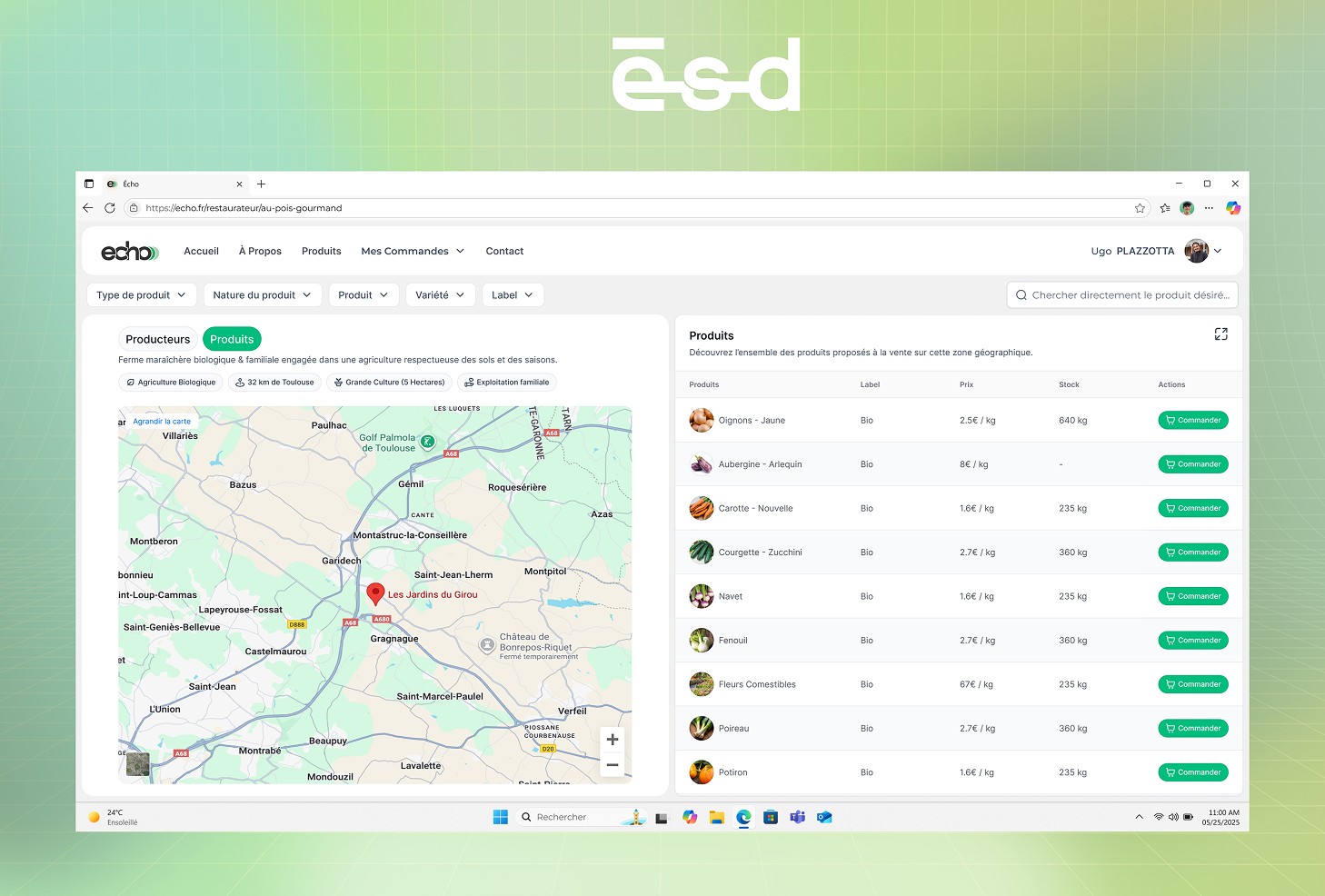
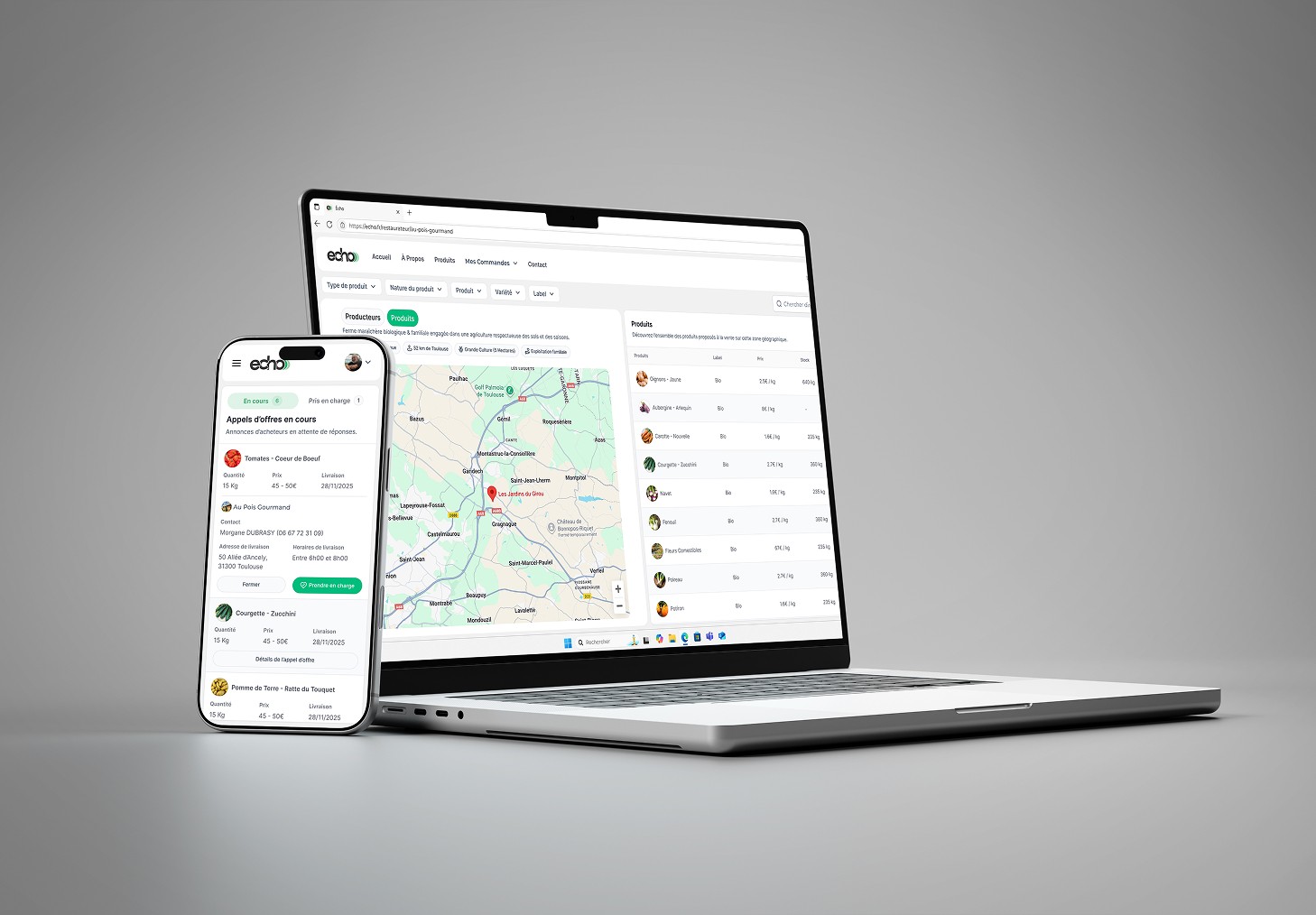
The project explores how a centralized digital platform could help B2B2C consumers easily identify genuinely responsible products through clearer information, transparent sourcing, and accessible local alternatives.
During this workshop, our team defined the problem, developed the product strategy, designed the user experience, and built the overall visual identity in a limited timeframe.
Role : Product Thinking · UX Research · UI Design
Team size : 2 Designers & 2 Datas & 1 Strategist
Duration : 1 Week Startup Workshop
Focus : Responsible Consumption · Transparency · Local Ecosystems · UX Simplification
Context & Problem
Today, responsible consumption has become a strong aspiration among French consumers, yet this intention still faces many practical barriers.
From our quantitative research, nearly 70% of consumers want to adopt more responsible purchasing habits, but only 13% actually take action. Even well-established practices such as second-hand shopping are declining.
Through our research, we identified several recurring pain points beyond price :
Information overload caused by countless labels and certifications
Limited transparency regarding product origins and manufacturing
Difficulty comparing responsible alternatives
Lack of trust in sustainability claims
Poor accessibility to local and ethical ecosystems
This fragmented landscape creates confusion and discourages action, even among motivated consumers.
Echo was born from this observation.
Our ambition is to create a clear, centralized, and accessible platform that enables both consumers and professionals to easily identify genuinely responsible products. By structuring information and promoting a local, transparent, and reliable value chain, Echo simplifies access to more conscious and responsible consumption.
Research & Iterations
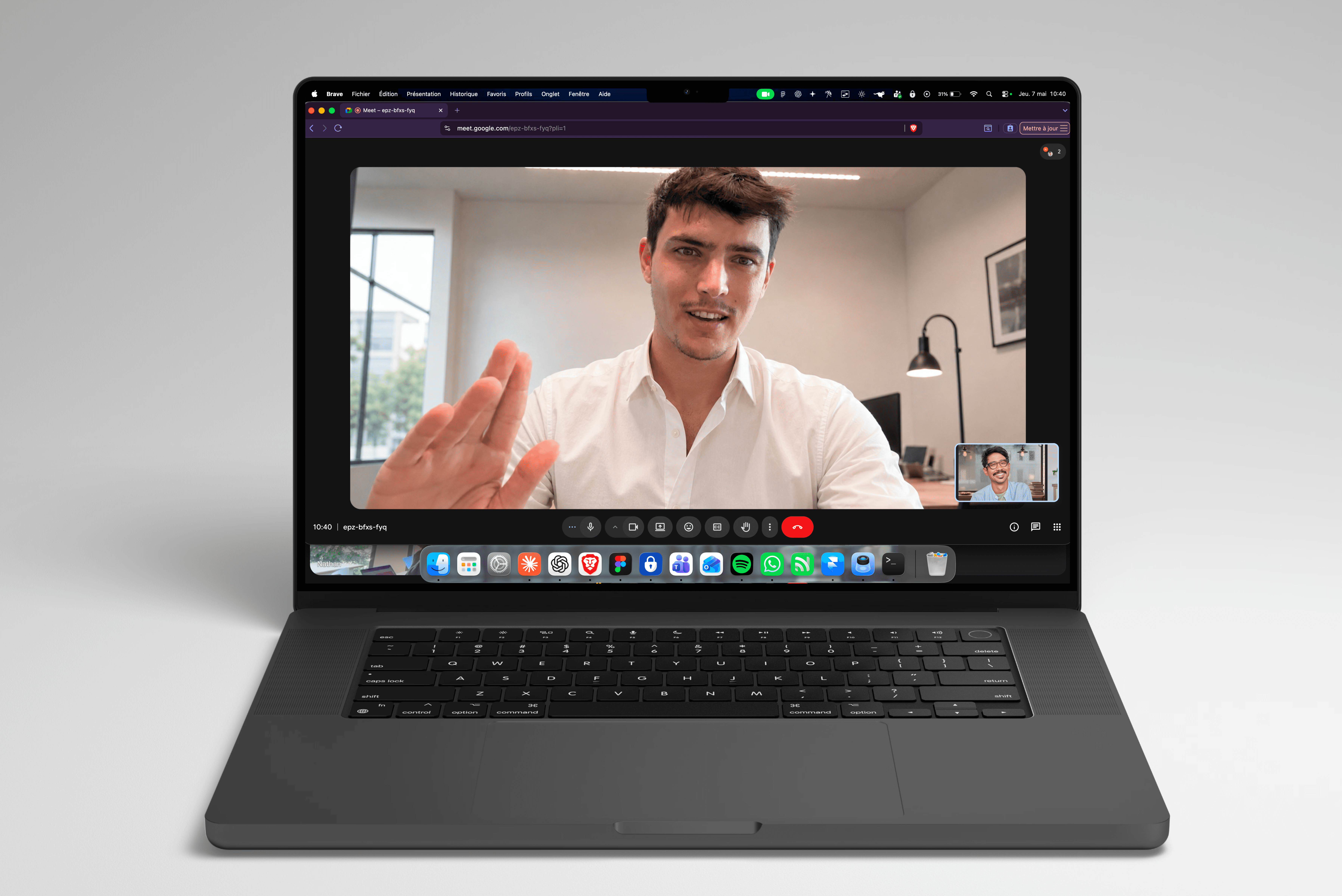
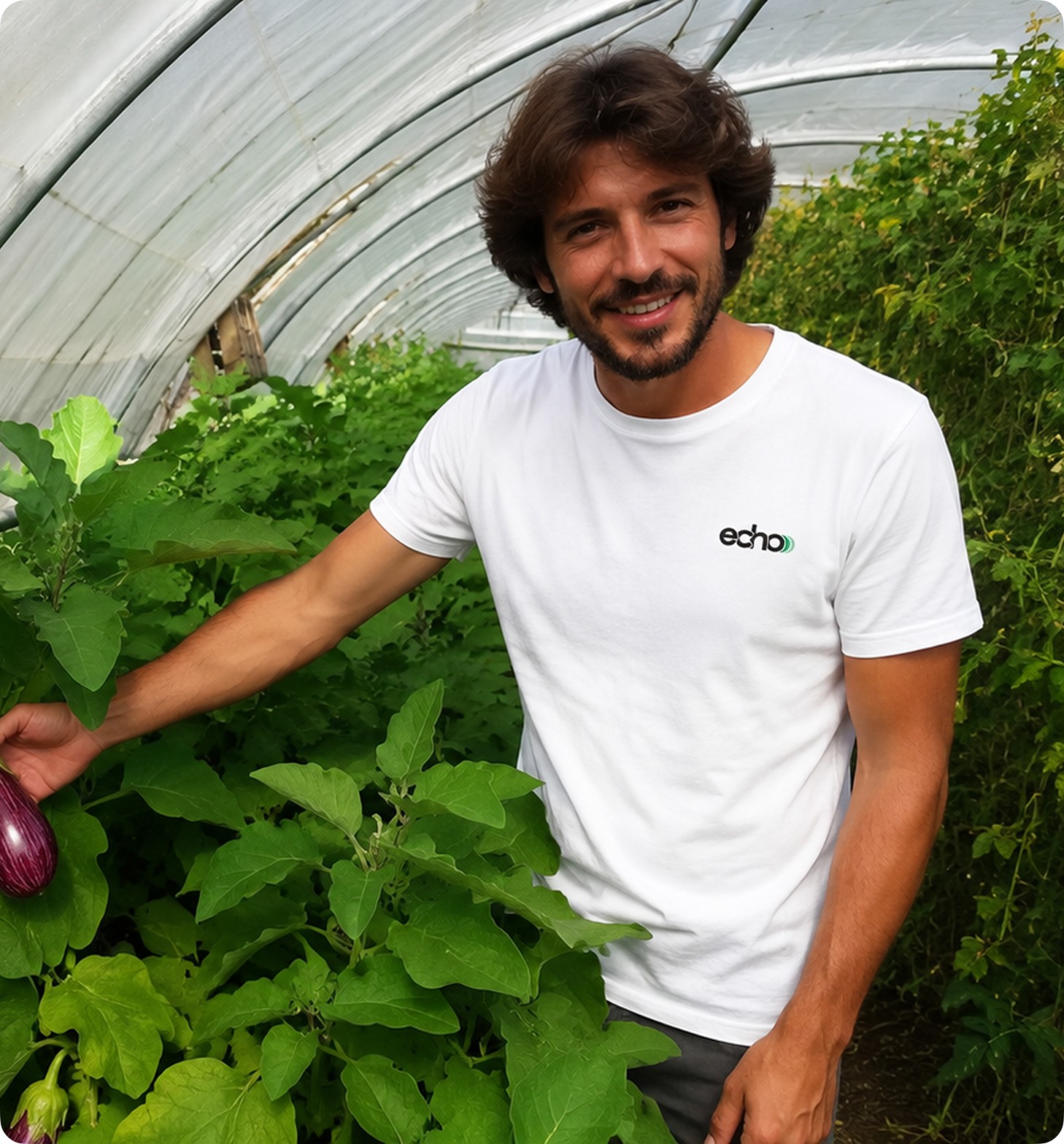
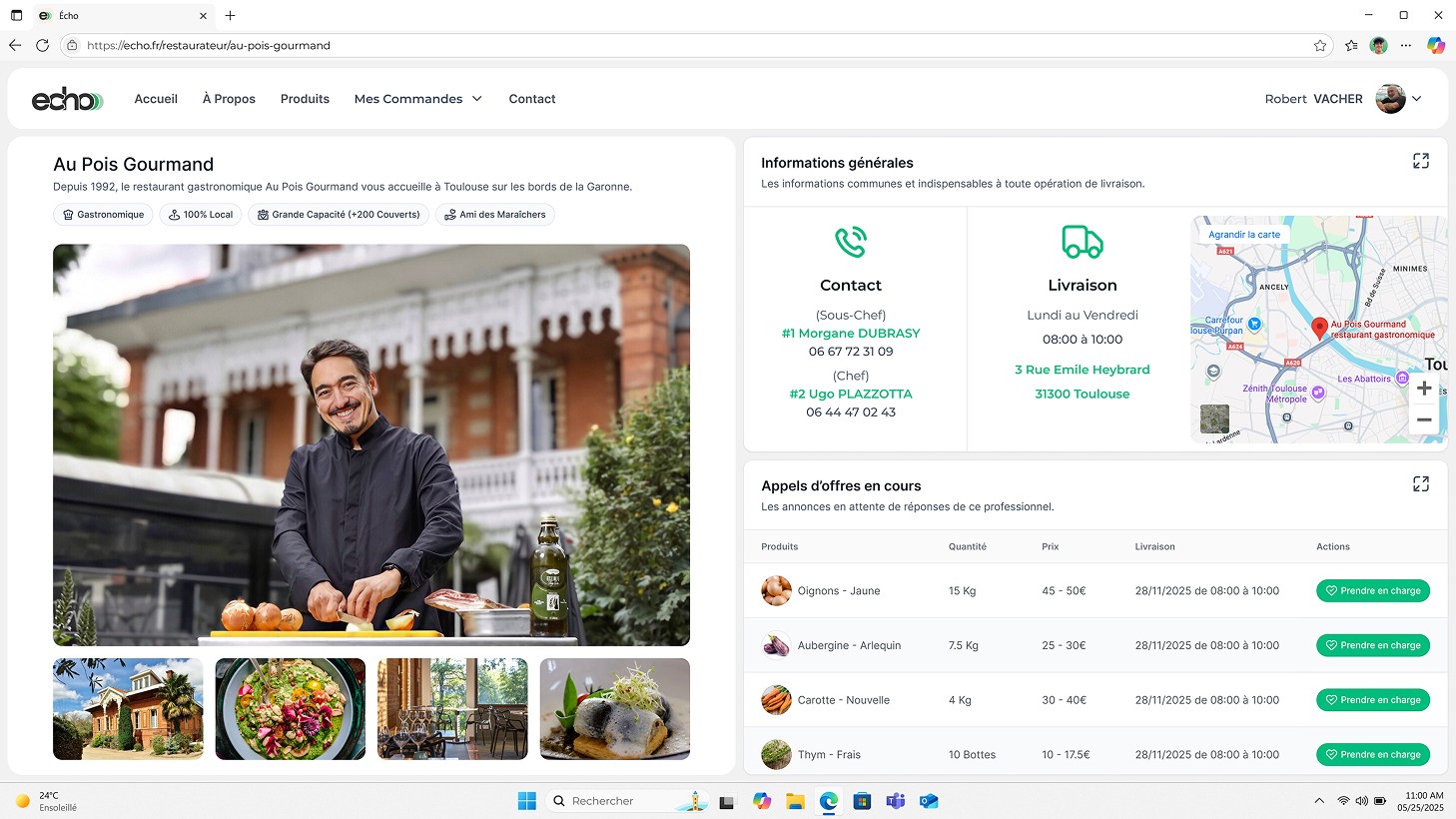
To better understand the ecosystem behind responsible consumption, I directly contacted local producers, farmers, breeders, bars, restaurants, and bistros. These conversations helped uncover real operational challenges around logistics, visibility, accessibility, and customer trust.
These interviews became a key turning point in the project. They allowed us to refine both the business model and the functional experience of the platform based on real-world constraints rather than assumptions.
Insights gathered during this phase directly influenced important product decisions such as :
Delivery methods
Pickup point systems
Local distribution flows
Information hierarchy and transparency
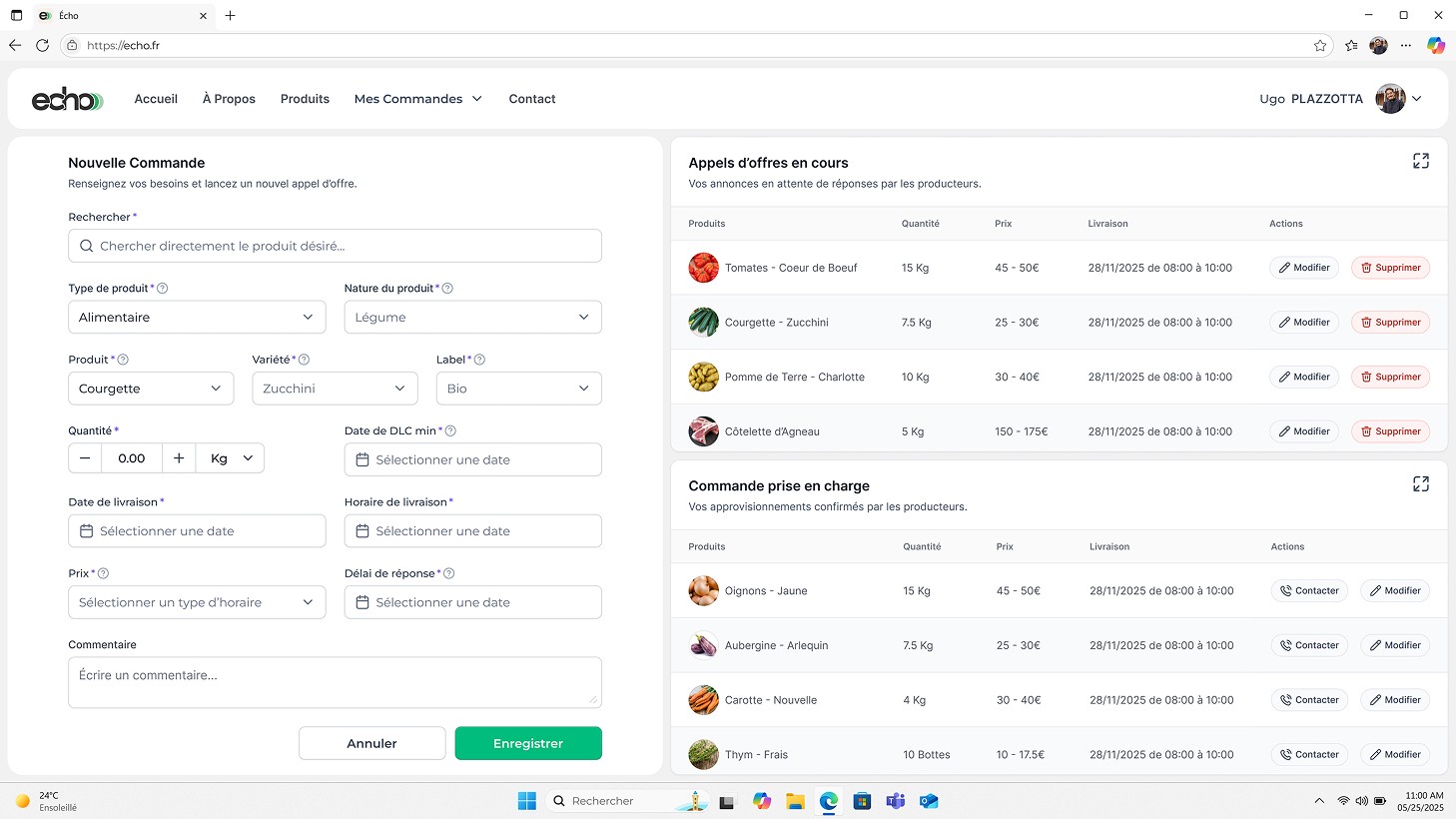
Through rapid iterations, the project evolved toward a simpler and more intuitive experience focused on one core objective: making responsible consumption easier to understand and access.
Outcome & Learnings
Echo allowed us to transform a complex societal issue into a clear and accessible digital experience within a very limited timeframe. Beyond the interface itself, the project became a strong exercise in product thinking, rapid iteration, and stakeholder-driven design.
One of the most valuable learnings came from our exchanges with producers and restaurateurs. This ecosystem was intentionally used as a first testing ground to challenge and validate the core idea in a real-world context. It demonstrated that the concept could scale far beyond food and local commerce, potentially extending to many other industries with different levels of intermediary complexity.
The project reinforced the importance of designing solutions rooted in real operational constraints, while keeping the experience simple, transparent, and accessible for end users.